



Batch manufacturing of a shaped housing calls for coordinated control of material stress, multi-face machining and surface finishing. This Xu Feng case presents the challenges and process requirements supplied for a 100-part batch of 2024 aluminum housings.
Project Background
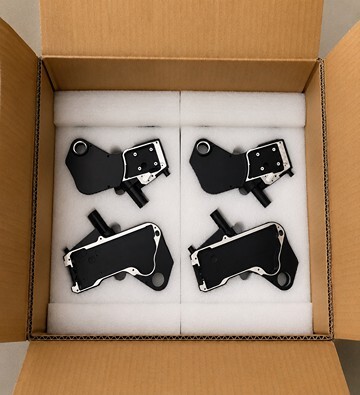
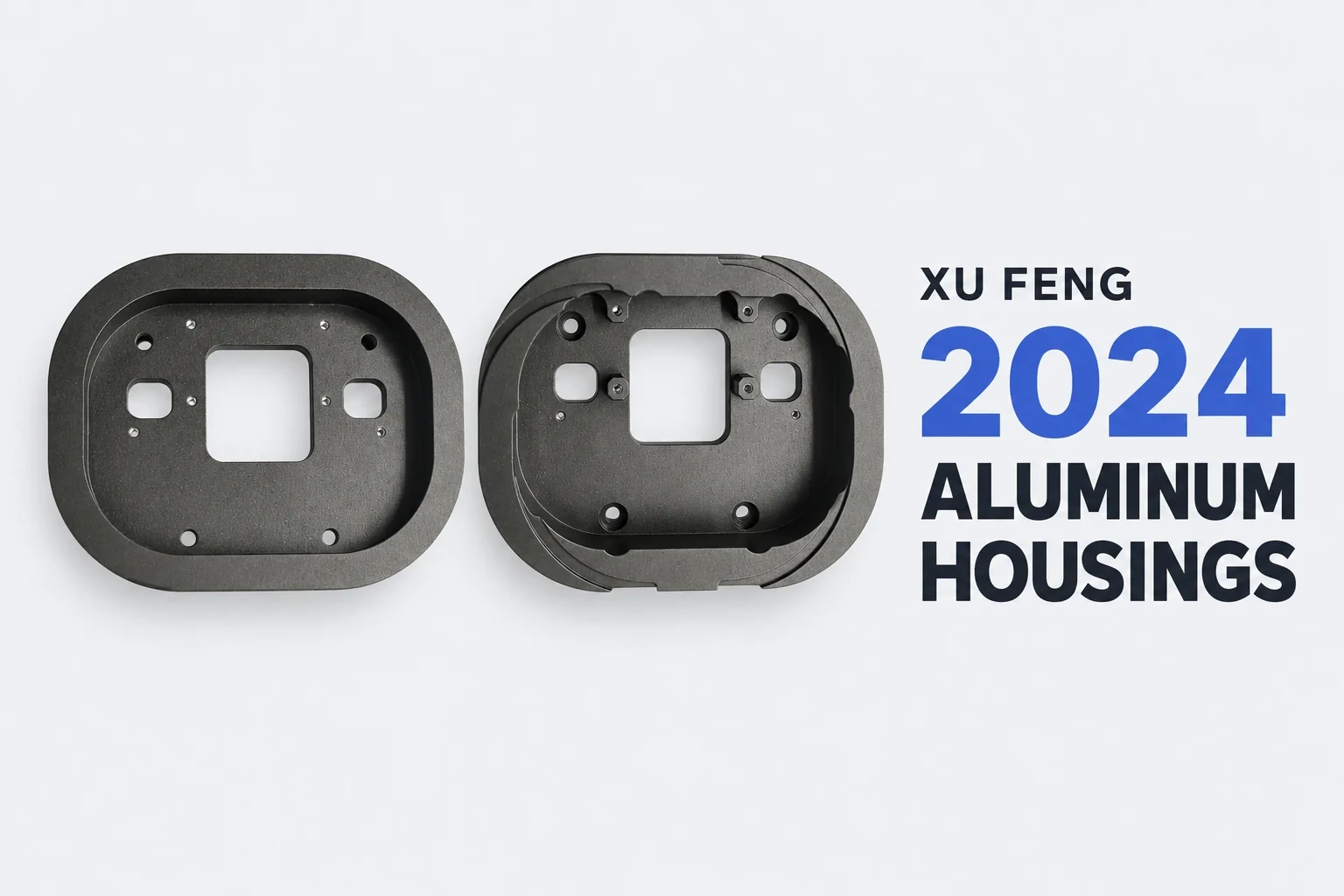
The project uses 2024 aluminum for a housing described in the brief as an irregular oval frame, with cavities on both faces, locating holes and shaped windows. The supplied photographs show dark-gray rounded housings with windows, internal steps and sidewalls. Substantial cavity material removal and repeated setups make flatness, geometric accuracy and appearance closely connected manufacturing requirements.
Specified regions require Ra 0.8 or Ra 1.6 μm, and sharp-edge chamfers are limited to C0.1 maximum. The brief lists H12/h12 and ±IT12/2 for unspecified tolerances, with the drawing determining their application. The stated batch size is 100 parts, accompanied by material, stress-relief heat-treatment and dimensional inspection reports.
Figure 1. Housing features in the supplied material. Appearance photographs do not establish roughness, coating thickness or dimensional compliance.
Manufacturing Challenges
Stress and distortion after cavity machining
The brief identifies residual stress and post-machining distortion as process risks for the 2024 aluminum component. Removing substantial material from the shaped frame makes stability after rough machining a priority for subsequent flatness and geometric requirements.
Two-sided features, local roughness and fine chamfers
Cavities, locating holes and windows require repeated setups on different faces. Clamping loads can distort the workpiece. Ra 0.8 and Ra 1.6 requirements apply to different regions and must be controlled accordingly. The C0.1 maximum chamfer also needs attention to avoid excessive edge removal affecting assembly.
Fine Blasting + Type I Hard Anodizing Challenges
According to the supplied brief, the product requires fine blasting followed by Type I chromic acid anodizing, with a specified coating thickness of 8–10 μm and a dark-gray color matched to the customer sample. The brief identifies color variation and coating uniformity as concerns for copper-containing 2024 aluminum. Consistent blast texture and stable pretreatment are additional priorities for batch appearance.
Xu Feng’s Process Solution
Follow the specified stress-relief treatment and control clamping loads
The plan calls for stress-relief heat treatment as specified on the drawing, addressing material stability after rough machining. Clamping force must be controlled during multi-face machining to limit pressure-induced deformation, alongside the region-specific roughness and chamfer requirements. Treatment temperatures and durations were not supplied and should follow the approved process documentation.
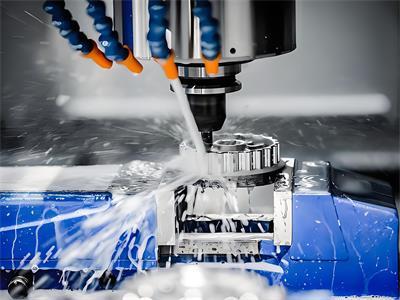
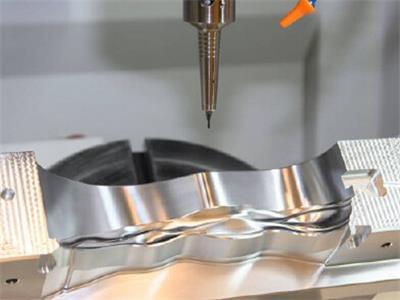
Figure 2. Sidewalls and edge features illustrate the need to coordinate multi-face machining with workholding loads.
Coordinate blasting, anodizing and thread protection
The plan brings blast texture, pretreatment consistency and customer-sample color matching into the finishing requirements. Threaded holes require protection before anodizing and removal of oxide film inside the threads afterward, as stated in the brief, to reduce the risk of thread seizure during assembly. Coating thickness and color remain acceptance requirements rather than conclusions drawn from photographs.
Support batch control with full inspection and documentation
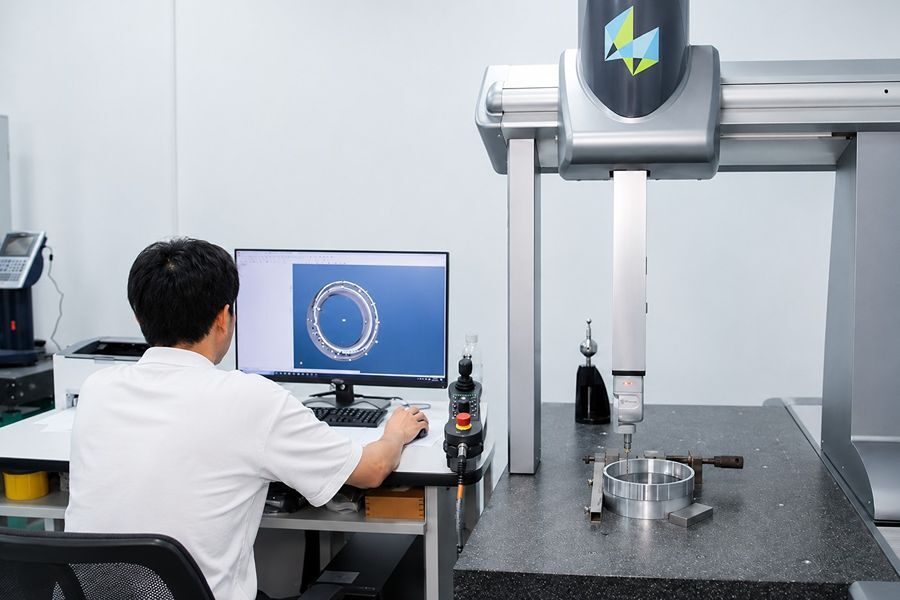
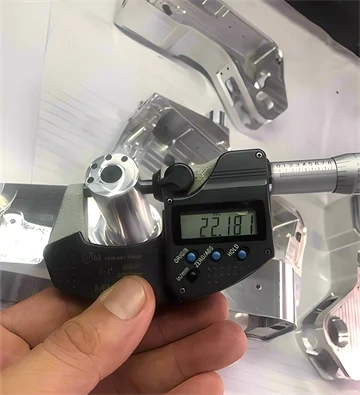
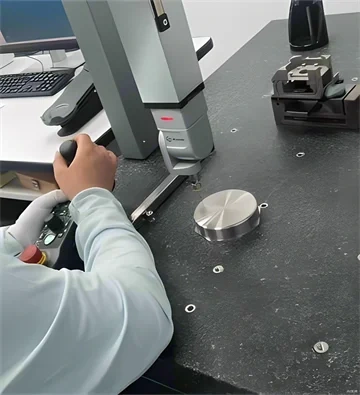
The project calls for full inspection of flatness, hole position and surface roughness. Numerous housing features involve multiple CMM measurement locations, which must be planned around the drawing’s geometric requirements, alongside appropriate roughness checks. Required shipment documentation comprises material, stress-relief heat-treatment and dimensional inspection reports.
Together, these requirements define the manufacturing plan for the 100-part batch: managing stress and clamping distortion, coordinating machining and finishing, and maintaining inspection and reporting controls.
For aluminum housings or multi-face precision components, share your drawings, 3D model, material condition, finishing specification and batch requirements with Xu Feng to discuss machining and inspection planning. Contact Xu Feng →